Spotting Performance Declines from Extensive Travel in Pro League Encounters
Casey Walter · Aug 7, 2026
Spotting Performance Declines from Extensive Travel in Pro League Encounters
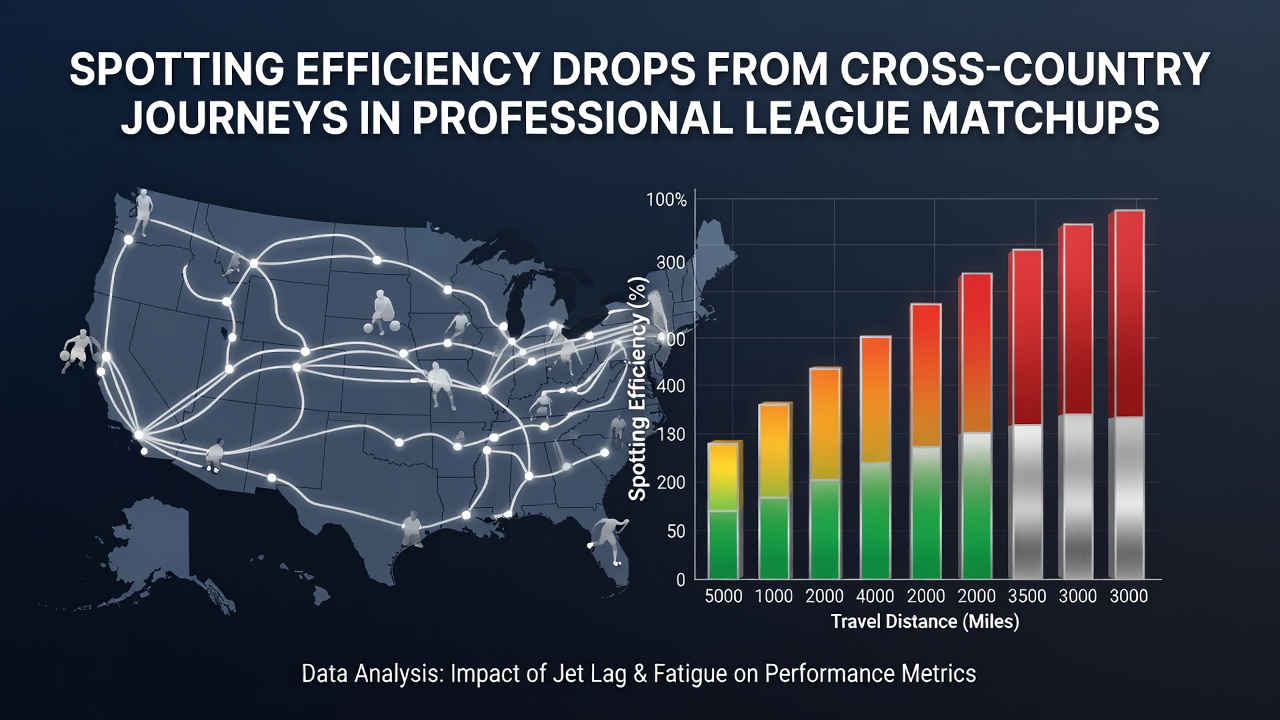
Cross-country journeys in professional leagues create measurable efficiency drops for teams that accumulate miles over short periods, and observers note consistent patterns across basketball, hockey, and baseball schedules. Researchers have tracked how time zone shifts, sleep disruption, and recovery gaps combine to reduce shooting percentages, defensive reaction times, and overall scoring output when squads play away from their home region.
Physiological Effects Documented in League Data
Studies from sports medicine groups show that athletes crossing three or more time zones experience elevated cortisol levels and reduced REM sleep for up to 72 hours after arrival. These changes correlate with drops in field goal accuracy of 4 to 7 percent in NBA road games following Pacific-to-Eastern flights, according to performance analytics compiled over multiple seasons. Similar declines appear in NHL skater metrics where teams travel from Western Canada to the Northeast corridor within 48 hours, producing lower shot conversion rates and higher giveaway totals during the first period of back-to-back contests.
Baseball schedules add another layer because starting pitchers often fly immediately after their previous outing, which affects pitch velocity and command in the subsequent start. Data collected by major league organizations reveal that pitchers with cross-country travel in the prior 48 hours post earned run averages roughly 1.2 runs higher than their season norms, while teams using charter flights with adjusted sleep protocols show smaller variances.
League Schedules and August 2026 Patterns
August 2026 schedules for several North American leagues feature condensed Western-to-Eastern swings that amplify these effects. The NBA preseason and early regular season include multiple California-to-Florida trips within five days, whereas MLB interleague play places several West Coast clubs on extended East Coast road trips during the same window. Observers tracking these fixtures note that home teams facing rested opponents after such travel sequences post higher win percentages, particularly in games scheduled less than 36 hours after the visiting squad lands.
Identifying Efficiency Drops Through Metrics
Analysts monitor several indicators to flag potential declines before lines adjust. Advanced tracking systems record lower average sprint speeds and reduced defensive closeout distances for teams arriving after overnight flights. In hockey, power-play conversion rates fall when clubs cross two or more zones without a full practice day. Basketball lineups that rely on older rosters or feature players with documented recovery challenges show amplified effects, while younger, deeper benches sometimes mitigate the impact through rotation adjustments.
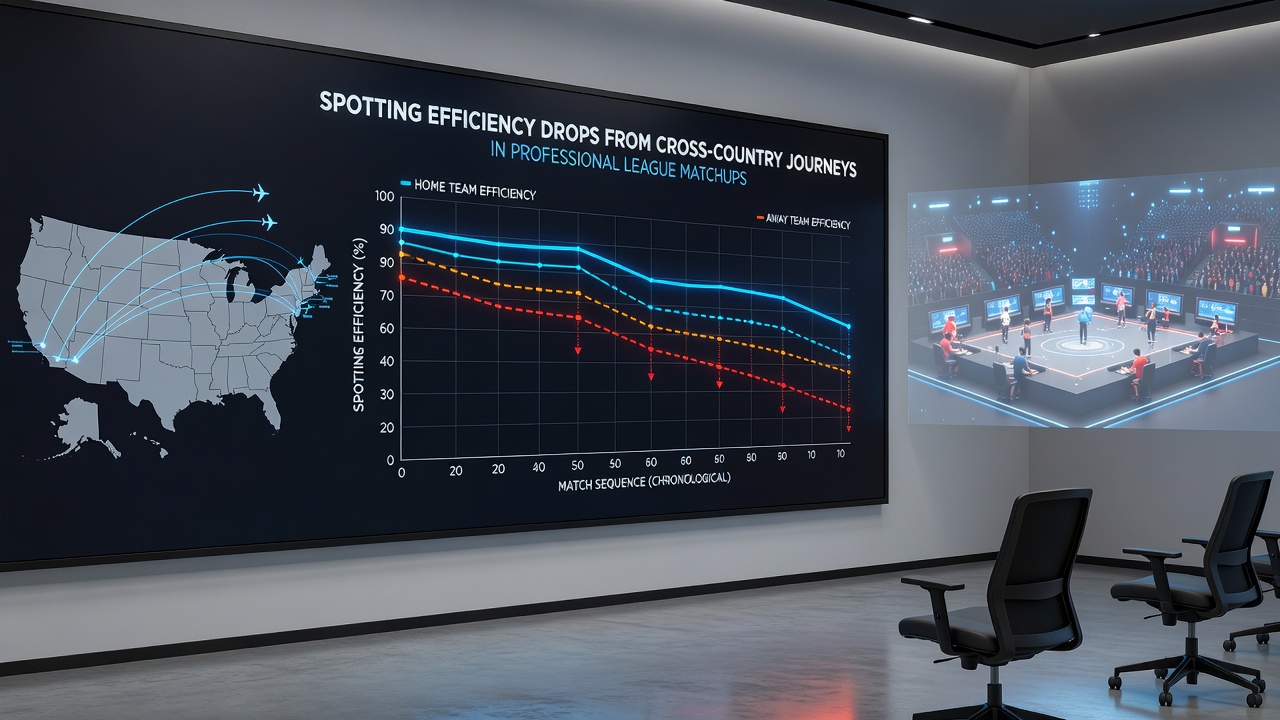
Those who study betting markets have observed that totals markets reflect these patterns more readily than sides, because both teams often experience some travel but the side returning from farther away shows sharper output reduction. Public bettors frequently overlook these nuances when focusing solely on recent form or head-to-head records that do not account for travel distance.
Research Sources and Comparative Studies
A longitudinal analysis published in the Journal of Science and Medicine in Sport examined 1,200 professional games across three leagues and found that travel distance exceeding 1,500 miles within 72 hours preceded statistically significant performance decrements in away teams. Separate work from the Australian Institute of Sport compared domestic and transcontinental travel effects, revealing that even domestic long-haul flights within a single country produced measurable jet-lag symptoms when departure and arrival times disrupted normal circadian rhythms.
Canadian university researchers have examined NHL data and documented similar outcomes, noting that teams flying east to west sometimes recover faster due to the direction of travel, whereas west-to-east trips correlate with steeper early-game efficiency losses. These findings align with broader physiological research on circadian misalignment rather than simple distance alone.
Practical Application for Matchup Analysis
People reviewing upcoming fixtures can cross-reference travel logs with player availability reports and recent mileage totals. When a club plays three road games in four nights that include two cross-country legs, efficiency metrics from the prior two seasons often predict reduced output in the fourth game of the stretch. Conversely, squads returning home after a single long-haul trip frequently post stronger performances, especially when the opponent also carries travel fatigue.
League rule changes in 2025 that increased charter flight requirements for certain divisions have slightly narrowed these gaps in some conferences, yet data from the first half of the 2025-2026 seasons still shows measurable differences when schedules force consecutive long-distance games. August 2026 will test whether expanded rest protocols further reduce the impact or whether condensed early-season calendars maintain the historical patterns.
Conclusion
Travel-related efficiency drops remain a recurring factor in professional league outcomes, and structured analysis of mileage, time-zone changes, and recovery windows allows observers to anticipate where performance variances are most likely to appear. Continued collection of granular tracking data across multiple seasons will refine these models while league schedules evolve.