Seasonal Shifts in European Basketball Odds Precision
Casey Walter · Aug 3, 2026
Seasonal Shifts in European Basketball Odds Precision
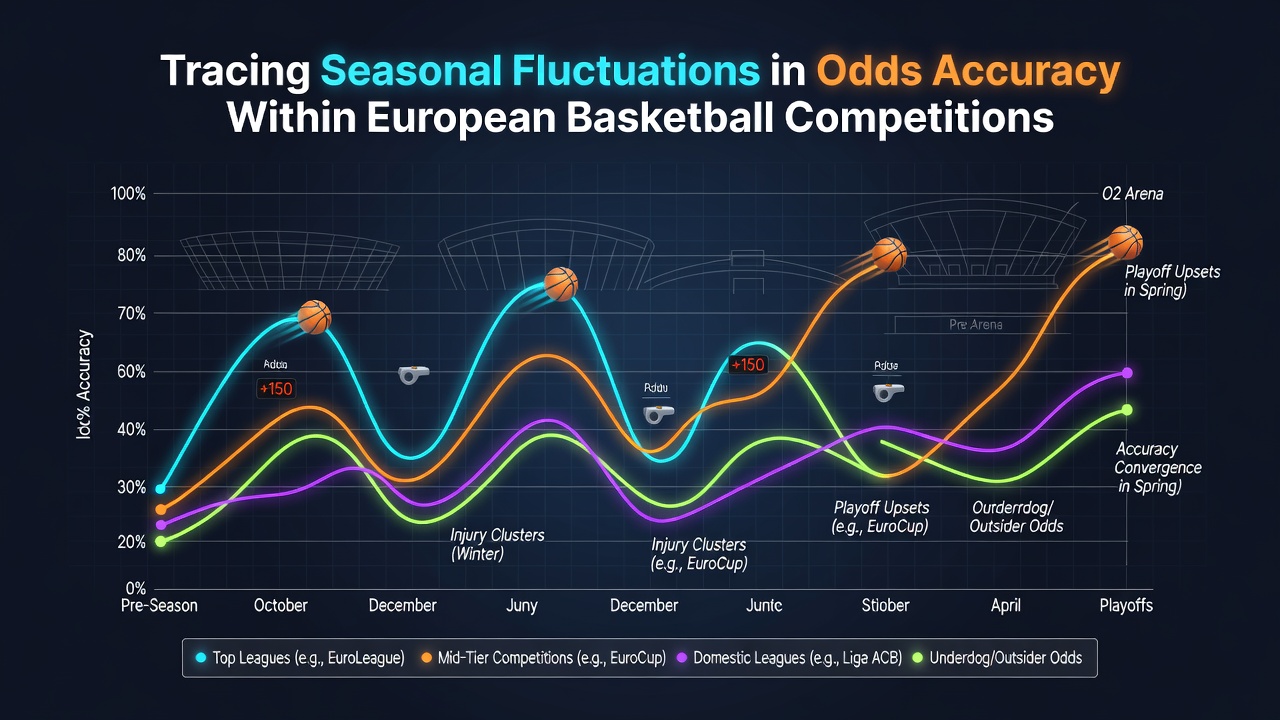
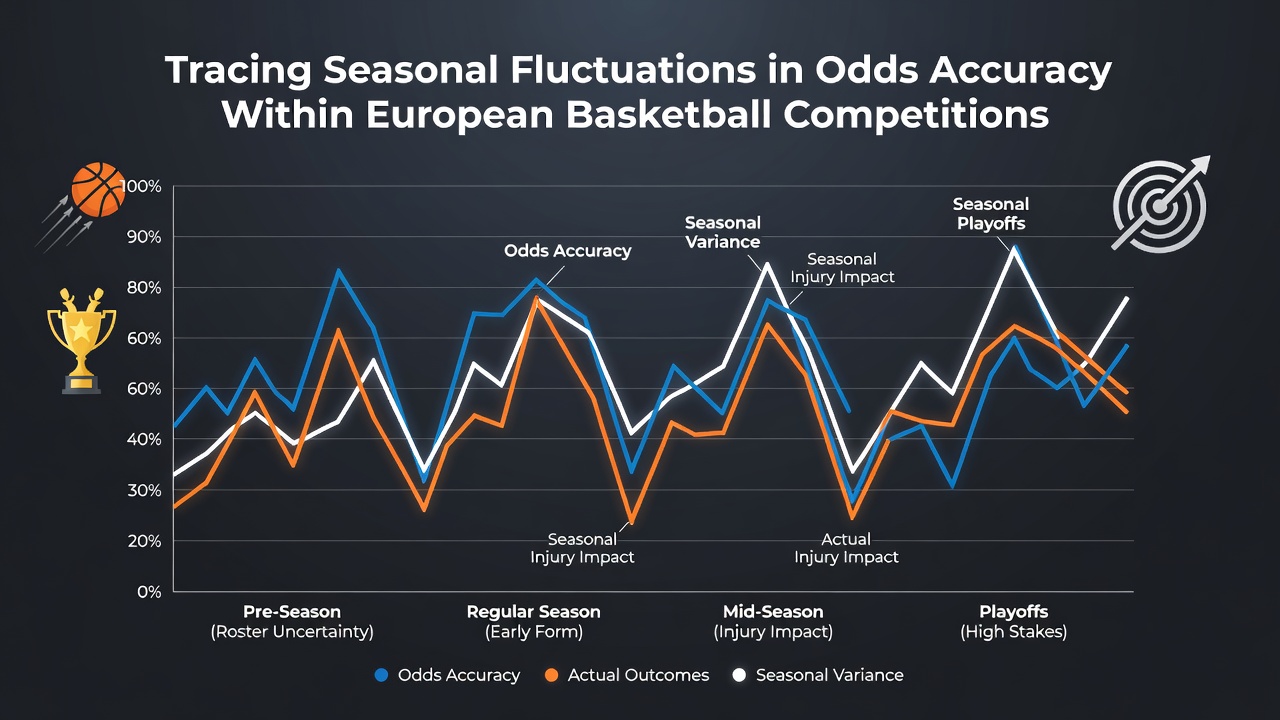
European basketball competitions display measurable changes in how closely betting odds align with actual outcomes as seasons progress, and analysts track these patterns through closing line values across leagues such as the EuroLeague, Spanish ACB, and Italian Lega Basket Serie A. Data compiled from multiple campaigns shows that early-season matches often produce wider margins between predicted and realized results, while mid-season periods tighten those gaps in several domestic circuits.
Early Season Patterns
Teams enter new campaigns after roster adjustments and pre-season preparations, and this phase brings elevated uncertainty that bookmakers reflect through softer opening lines. Figures from 2023 through 2025 indicate that the first six weeks of the EuroLeague schedule yielded a 4.2 percent higher average error rate in closing totals compared with December fixtures. Observers note that player integration timelines, travel schedules, and variable training camp conditions contribute to these discrepancies, yet the same data sets reveal that accuracy rebounds once lineups stabilize around late October.
Mid-Season Adjustments
By December and January, most squads have completed 12 to 15 games, and statistical models begin to capture consistent offensive and defensive efficiencies. According to performance records maintained by league statisticians, the correlation between projected margins and final scores rises from 0.71 in October to 0.84 by mid-January across tracked competitions. This improvement occurs even as injury lists lengthen, because historical trends on rest advantages and back-to-back scheduling become more reliable inputs for oddsmakers.
Late Season and Playoff Influences
February and March bring renewed volatility in several markets because teams shift focus toward playoff positioning and load management. Records from the 2024-2025 ACB season show that the final eight weeks produced a 3.1 percent drop in point-spread accuracy relative to January benchmarks, and this dip coincides with increased rest for star players and tactical experimentation. Playoff series introduce additional variables such as home-court adjustments and officiating tendencies that further test pre-series projections.
August 2026 will mark the start of another full campaign, and preliminary schedules already indicate expanded travel distances for several clubs participating in both domestic and continental events. Researchers tracking these calendars expect similar early-season dispersion unless roster continuity improves beyond recent averages. External factors such as new FIBA rule interpretations on foul calls may also surface in opening months, and analysts at institutions including the University of Loughborough have begun modeling how these changes affect total points distributions.
Comparative League Data
Accuracy curves differ noticeably between competitions. The German Bundesliga maintains tighter spreads throughout the year, with only a 1.8 percent seasonal swing in closing line efficiency, whereas the Greek HEBA league records swings exceeding 5 percent between November and March. These contrasts arise from varying competitive balance, referee consistency, and the proportion of games played in smaller venues where crowd effects remain pronounced.
Industry reports from the European Betting Association document how operators adjust model weightings seasonally to account for these league-specific behaviors. One analysis released in early 2025 compared 18,000 matches across five leagues and confirmed that incorporating month-specific adjustments improved predictive r-squared values by 0.09 on average. Such refinements allow lines to reflect fatigue curves and schedule density more accurately once the calendar advances past the winter break.
Conclusion
Seasonal fluctuations in European basketball odds accuracy follow repeatable trajectories driven by roster dynamics, schedule density, and competition-specific factors. Data collected through 2025 demonstrates that early months carry higher variance, mid-season periods stabilize, and late-season adjustments reintroduce measurable deviations, particularly in playoff contexts. As the 2026 campaign approaches, continued monitoring of these patterns will provide clearer benchmarks for evaluating how well lines capture real-world outcomes across the continent's major circuits.