Detecting Live Arbitrage Windows Through Cross-Sport Odds Aggregation in Multi-Market Feeds
Viktor Zimmermann · Jul 31, 2026
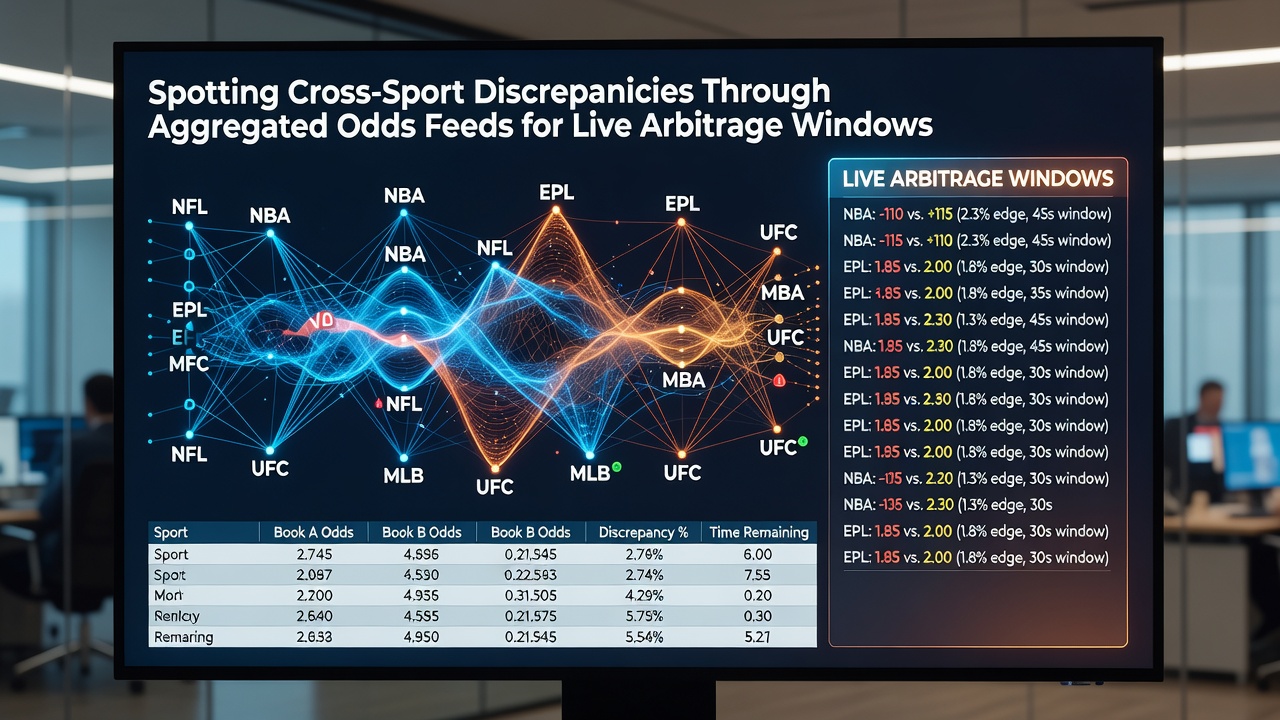
Detecting Live Arbitrage Windows Through Cross-Sport Odds Aggregation in Multi-Market Feeds
Market data platforms compile odds from dozens of bookmakers into unified feeds, and those feeds allow observers to scan multiple sports simultaneously for pricing inconsistencies that open during live events. Aggregated systems pull lines on football, tennis, basketball and horse racing at the same moment, then flag spreads where implied probabilities do not align across related but separate contests. Traders monitor these feeds because simultaneous mismatches can create short-lived arbitrage windows before individual operators adjust their books.
Mechanics of Aggregated Odds Feeds
Operators publish prices in real time through APIs, while aggregation engines normalise those prices into comparable formats that highlight decimal, fractional or American odds side by side. Software layers then calculate implied probabilities for each outcome and compare them across unrelated sports, such as a live tennis set and an ongoing basketball quarter. When the summed probabilities across two different events fall below 100 percent, or exceed it in the opposite direction, an opportunity appears. Data shows these calculations run continuously, refreshing every few seconds during peak hours when multiple leagues overlap.
Cross-Sport Discrepancy Patterns
Discrepancies emerge when liquidity differs sharply between markets. A high-volume football match might attract tighter margins while a lower-profile volleyball game carries wider spreads, yet both events occur within the same time window. Aggregated feeds capture this imbalance because they weight volume and movement data from each sport separately. Observers note that a sudden shift in one sport’s odds, caused by an injury report or weather update, can ripple into correlated pricing on another sport if bettors move capital quickly between books. Research indicates these ripples appear most clearly when feeds include both pre-match and in-play lines from the same operators.
Live Arbitrage Window Identification
Traders set alerts within the aggregated platforms to trigger when combined probabilities across two or more sports drop below a chosen threshold. The alert typically includes the exact stake distribution needed to lock in a margin, calculated from current prices. In July 2026, during overlapping international tournaments and domestic leagues, such alerts increased in frequency because schedules placed morning tennis matches alongside afternoon basketball and evening horse racing. Systems that aggregate across continents capture these staggered schedules and surface opportunities that single-sport monitors miss.

Execution requires rapid placement across multiple accounts, since the window often closes within ninety seconds once one bookmaker updates its line. Automated scripts connected to the aggregated feed can submit bets in under two seconds when conditions match pre-set parameters. Manual traders, by contrast, rely on pre-funded balances and one-click interfaces to remain competitive. Figures from industry reports reveal that successful captures usually involve three or four different operators rather than repeated use of the same book.
Data Sources and Geographic Variation
Feeds draw from operators licensed in multiple jurisdictions, which introduces regional pricing differences. European books may price a tennis match more conservatively than North American books during the same afternoon, while Australian exchanges adjust totals based on local betting patterns. American Gaming Association data illustrates how these regional variations widen during multi-sport days. A separate study released by the Victorian Responsible Gambling Foundation examined price dispersion across sports and found measurable gaps when feeds combined European and Asia-Pacific operators. Those gaps create the raw material for cross-sport arbitrage calculations.
Risk Controls and Operational Limits
Even when feeds identify a discrepancy, account restrictions and bet acceptance delays can prevent full execution. Operators monitor unusual stake patterns and may limit or close accounts that repeatedly exploit the same mismatch. Aggregated platforms therefore include risk flags that estimate the probability of acceptance based on historical acceptance rates for each bookmaker. Traders review these flags before committing capital, because a rejected bet on one leg can leave the remaining positions exposed. Data indicates that acceptance rates drop during high-volume periods such as the July 2026 tournament cluster, when many operators face simultaneous traffic spikes.
Conclusion
Aggregated odds feeds provide the visibility needed to detect pricing inconsistencies that span separate sports, and those inconsistencies translate into live arbitrage windows when probabilities align favourably. Continuous monitoring, rapid execution tools and awareness of regional pricing differences remain central to capturing those windows before they close. As multi-sport schedules continue to overlap, the same feeds that compile the data also record how often such opportunities arise and how long they persist.